Friday, February 17, 2017

Color Sketchbook Assignment


Due March 3rd with Color Project
  • Design a composition and create 3 versions of it, each on a separate page:
    1. A version using only 2 complimentary colors
    2. A version using a triadic color palette
    3. A version using a split-complementary color palette
  • For each version, the composition must stay the same; only the color palette will change.
  • Use only the hues you have chosen for each version.  Do not mix them with each other or with black or white.
  • Use whatever material you prefer for this assignment, as long as it is a color medium.


Color Theory Terms & Images


  • Color Wheel – A circle with different colored sectors used to show the relationship between hues.
  • Hue – A pure color from the color wheel that has not been mixed with black or white.
  • Saturation The intensity of a color, expressed as the degree to which it differs from white or black.
  • Primary Colors – The three colors from which, theoretically, all other colors can be mixed:  red, yellow, and blue.
  • Secondary Colors – The three colors which can be made by mixing two primaries in equal proportion: orange, green, and violet. 
  • Tertiary Colors – Colors which can be made by mixing a primary color and a secondary color.
  • Triadic Colors – Color relationships based on any three equidistant hues as shown on the color wheel.
  • Complimentary Colors – Colors directly opposite each other on the color wheel that, when combined in the right proportions, neutralize each other.


Monday, February 13, 2017

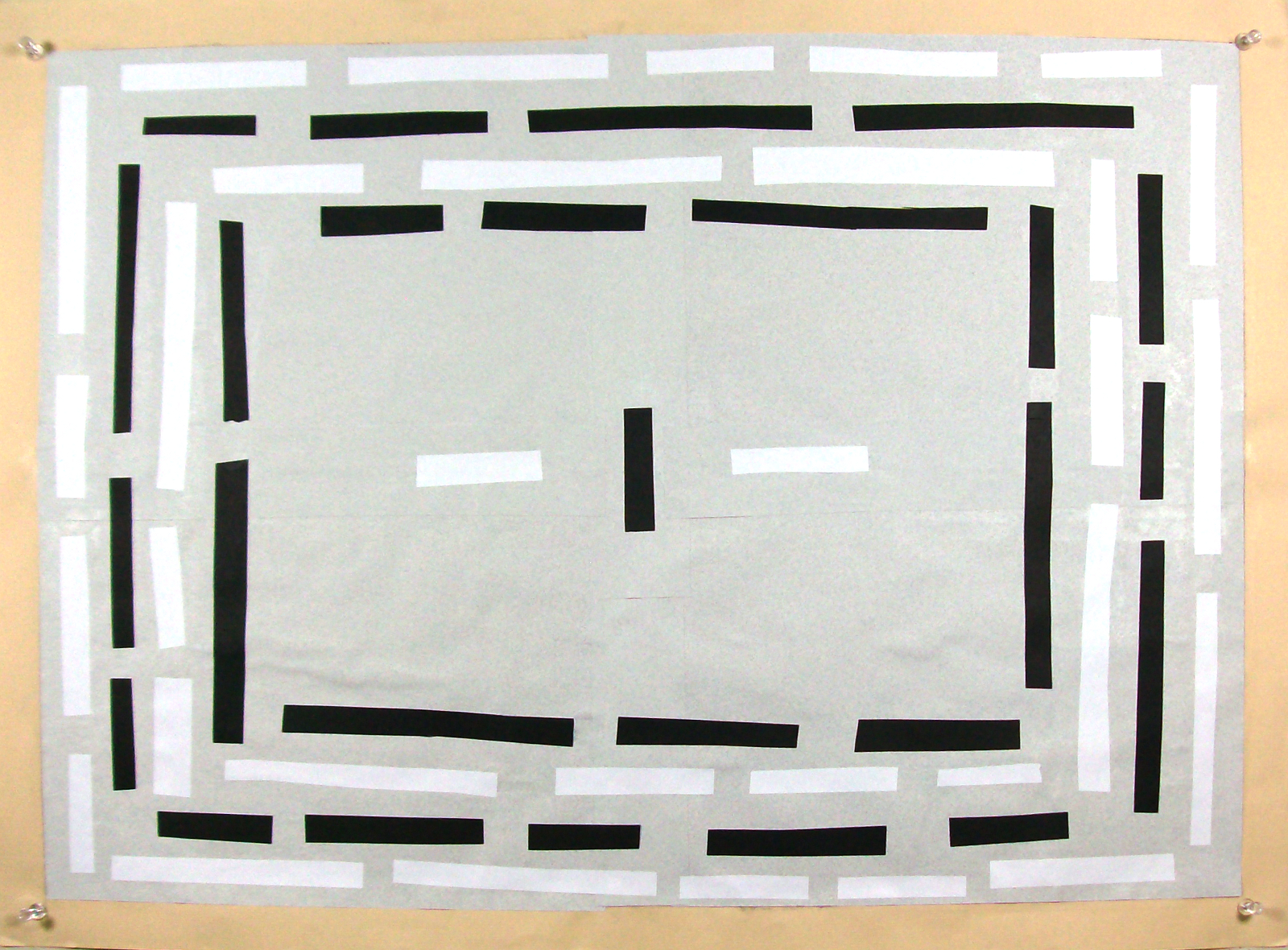
Collage Assignment: Repetition & Rhythm

Due: Monday, February 20

Assignment:
  1. Organize a sheet of 18”x24” paper by creating a 1” border on all four sides.
  2. Within this new picture plane, design a composition that utilizes repetition and rhythm to guide the viewer’s eye around the composition.
  3. Using cut and pasted greyscale paper, construct your composition using organic and/or geometric shapes and lines.
  4. This time, I don’t mind if some of your shapes are representational, but don’t lean so heavily on representation that you ignore your exploration of rhythm.
  5. Assignment (Emphasis & Rhythm/Repetition) due:  Monday, February 20.

Notebook:
  • Research the obsessive work of Yayoi Kusama.  Place your notes, images, and any articles into the notebook.
Sketchbook:
  1. Create at least 3 possible compositions in the sketchbook BEFORE beginning work on the full-sized collage.  You may use the materials of your choice for these sketches (pencil, charcoal, ink, paint, collage, etc.).
  2. Choose the composition you’ll use for the assignment and write some notes about WHY you chose it.
  3. Find at least 3 images by artists who use repetition and rhythm to create movement in their work.  Insert images into your sketchbook and write and draw over the images to explain how you see that artist using repetition and/or rhythm.  No more than TWO of them may be artists mentioned in class today.
  4. Choose one image and do a master study of it.
Remember that the notebook and sketchbook are turned in with every assignment.


Tuesday, February 7, 2017

Collage Assignment: Emphasis

Due: Monday, February 20

Assignment:
  1. Organize a sheet of 18”x24” paper by creating a 1” border on all four sides.
  2. Within this new picture plane, design a composition that is arranged so that there is a clear focal point using emphasis.
  3. Using cut and pasted greyscale paper, construct your composition using organic and/or geometric shapes and lines.
  4. This time, I don’t mind if some of your shapes are representational, but don’t lean so heavily on representation that you ignore your exploration of emphasis.
  5. Assignments (Emphasis & Rhythm/Repetition) due:  Monday, February 20.

Notebook:
  • Research two artists who use emphasis to create a focal point.   One of these two artists can be someone we discussed in class today. Place your notes, images, and any articles into the notebook.
Sketchbook:
  1. Create at least 3 possible compositions in the sketchbook BEFORE beginning work on the full-sized collage.  You may use the materials of your choice for these sketches (pencil, charcoal, ink, paint, collage, etc.).
  2. Choose the composition you’ll use for the assignment and write some notes about WHY you chose it.
  3. Find at least two images by artists who use emphasis to create a focal point in their work.  Paste these images into your sketchbook and write notes and draw over the images to explain how you see that artist creating emphasis.  No more than ONE of them may be artists mentioned in class today.
  4. Choose one image and do a master study of it.
Remember that the notebook and sketchbook are turned in with every assignment.


Wednesday, February 1, 2017

Collage Assignment: Asymmetrical Balance

Due Monday, February 6

Assignment:

  • Organize a sheet of 18”x24” white paper by creating a 1” border on all four sides.
  • Within this new picture plane, design a composition that utilizes asymmetrical balance.
  • Using cut and pasted greyscale paper, construct your composition using organic and/or geometric shapes and lines.
  • Assignment (Symmetrical & Asymmetrical) due:  Monday, February 15.
Considerations:
  • Are the shapes in your composition interestingly varied in scale, placement, proximity, and shape type (organic/geometric)?
  • Keep the principles of design—such as contrast, placement, proximity, balance, and rhythm—in mind as you craft your composition.
  • How are you choosing to balance the elements in your composition?  Are you making good use of negative space?
  • Is there a compositional pathway that keeps your viewer on the page?  If not, what elements could you add to incorporate a pathway?
Notebook:
  • Find 2 artists who use asymmetrical balance in their work.  (One of these can be Edgar Degas from the lecture.)  Research these artists and place your notes, images of the artists' work, and any articles you find interesting into the notebook.
Sketchbook:
  1. Create at least 3 possible compositions in the sketchbook BEFORE beginning work on the full-sized collage.  You may use the materials of your choice for these sketches (pencil, charcoal, ink, paint, collage, etc.).
  2. Choose the composition you’ll use for the assignment and write some notes about WHY you chose it.
Remember that the notebook and sketchbook are turned in with every assignment.


Wednesday, January 25, 2017

Collage Assignment: Symmetrical Balance

Due Monday, February 6

Assignment:

  1. Organize a sheet of 18”x24” white paper by creating a 1” border on all four sides.
  2. Within this new picture plane, design a composition that utilizes symmetrical balance.
  3. You must use one central axis/line of symmetry, but you may create additional lines if you wish.
  4. All shapes that you place on one side of the axis must be mirrored on the opposite side of the axis.  
    • Each pair of mirrored shapes must be of the exact same scale and have the same proximity from the axis.
    • However, you may choose to use different values for the two shapes if you would like.
  5. Using cut and pasted greyscale paper, construct your composition using nonrepresentational organic and/or geometric shapes and lines.
  6. Assignment (Symmetrical & Asymmetrical) due:  Monday, February 6

Considerations:
  • Are the shapes in your composition interestingly varied in scale, placement, proximity, and shape type (organic/geometric)?
  • Keep the principles of design—such as contrast, placement, proximity, balance, and rhythm—in mind as you craft your composition.
  • You may use multiple values in this composition.  Therefore, consider how you might create interesting contrasts of dark and light values, as well as incorporating a variety of in-between values.
Notebook:
  • Find 2 artists who use symmetrical balance in their work.  (One of these can be Damien Hirst from the lecture.)  Research these artists and place your notes, images of the artists' work, and any articles you find interesting into the notebook.
Sketchbook:
  1. Create at least 3 possible compositions in the sketchbook BEFORE beginning work on the full-sized collage.  You may use the materials of your choice for these sketches (pencil, charcoal, ink, paint, collage, etc.).
  2. Choose the composition you’ll use for the assignment and write some notes about WHY you chose it.
Remember that the notebook and sketchbook are turned in with every assignment.


Tuesday, January 17, 2017

Collage Assignment: Positive & Negative Space

Due Monday, January 23

Assignment:
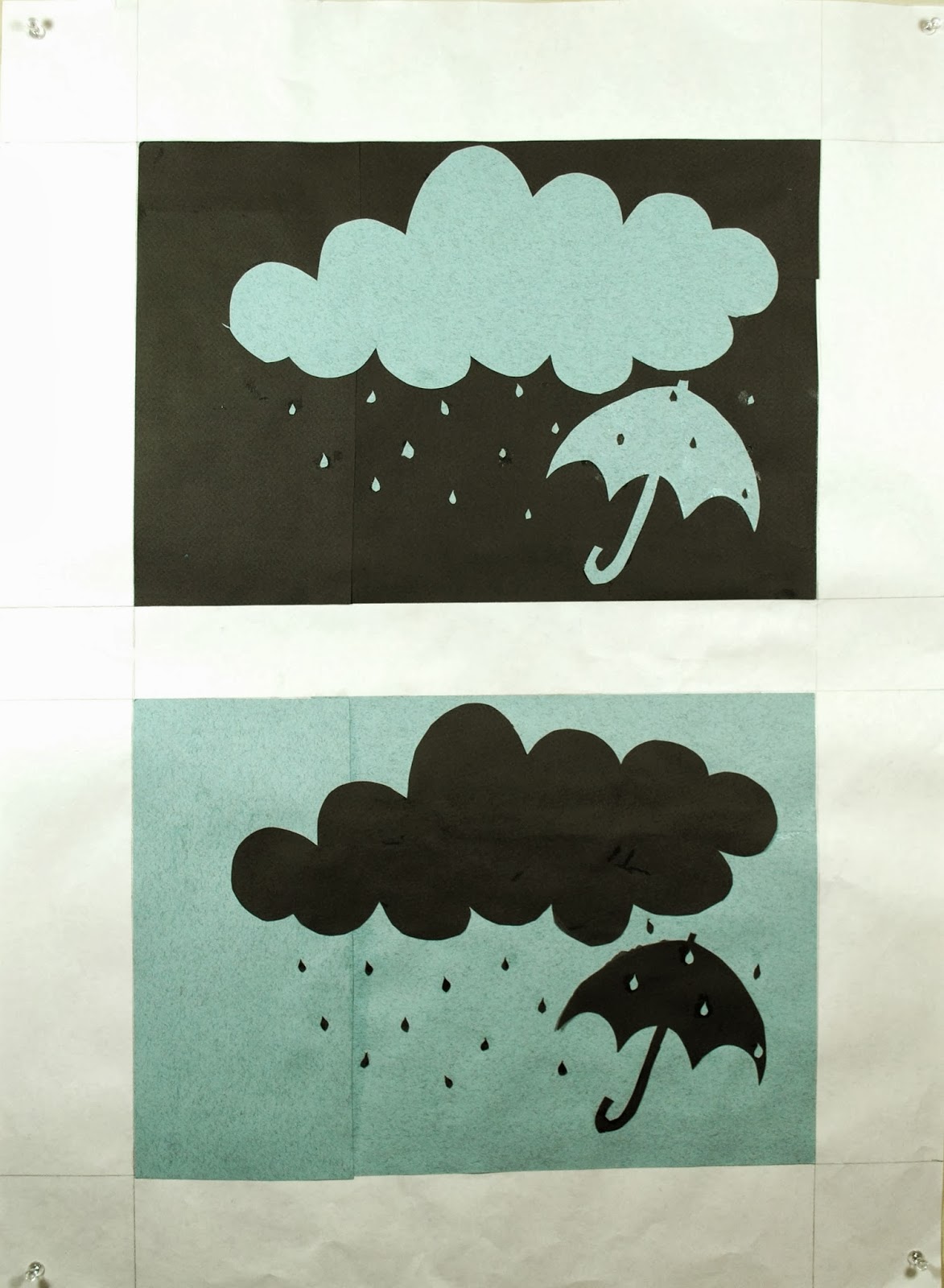
  1. Organize a sheet of 18”x24” white paper into two 9”x14” frames.
  2. Design a composition that utilizes positive & negative space using only 2 values.
  3. Using cut and pasted paper, create two collages, one in each frame, using the exact same composition in each, but reversing the values that signify positive and negative space (figure-ground reversal).
  4. Assignment due:  Monday, January 23.
Considerations:
  • Are the shapes in your composition interestingly varied in scale, placement, proximity, and shape type (organic/geometric)?
  • Since this assignment is about organizing 2-dimensional space, consider how your composition relates to the edges of the picture plane.
  • Keep the principles of design—such as contrast, placement, proximity, balance, and rhythm—in mind as you craft your composition.
  • Both compositions must be identical.  Therefore consider creating templates that can be traced for your shapes.
  • You may choose to design a composition with shapes that are representational (the shapes are made to resemble things in the world around us) or nonrepresentational/abstract (organic and geometric shapes that aren't meant to represent something else).

Notebook:
  • Find at least 2 articles on positive/negative space.  Read them, print them, and place them in the notebook.
  • Find images & information on M.C. Escher, Kara Walker, and at least one other artist who works with positive/negative shapes.  Paste an image you find interesting by each artist onto separate pages and write interesting information you learned below each.
  • Research papier collĂ© and write what you learn in the notebook.

Sketchbook:
  • Quickly sketch out at least 3 possible compositions in the sketchbook BEFORE beginning work on the full-sized collage.  You may use the materials of your choice for these sketches (pencil, charcoal, ink, paint, collage, etc.).
  • Choose the composition you will use for the assignment and write some notes about WHY you chose it.
Remember that the notebook and sketchbook are turned in with every assignment.